Integrating sustainability into your SAP S/4HANA transformation is critical for enabling audit-ready carbon accounting and future-proof ESG reporting. SAP S/4HANA design for carbon management ensures your system architecture is prepared to embed sustainability at its core — from process logic to data structures. This approach allows you to seamlessly connect with SAP sustainability footprint management (SFM), SAP green ledger, and other carbon tools for real-time, transactional carbon tracking and regulatory compliance.
With BearingPoint, sustainability becomes a guiding design principle — not an afterthought.
How it works:
- Clarifying your sustainability data landscape
Gaining clarity on the data used in SAP’s carbon management solutions – including sources, content, and formats.
- Conducting a fit-to-standard assessment
Identify gaps and define strategies to address them.
- Embedding sustainability into S/4HANA Design
Derive sustainability-driven requirements for your S/4HANA processes, data structures, and reporting – ensuring your new system supports your ESG goals from day one. This includes the ability to integrate with SAP Sustainability Footprint Management (SFM) and the Green Ledger – enabling automated, auditable tracking and reporting of carbon footprints directly within your ERP landscape.
Benefits from SAP S/4HANA Design for Carbon Management:
- Embed carbon insights into your business processes
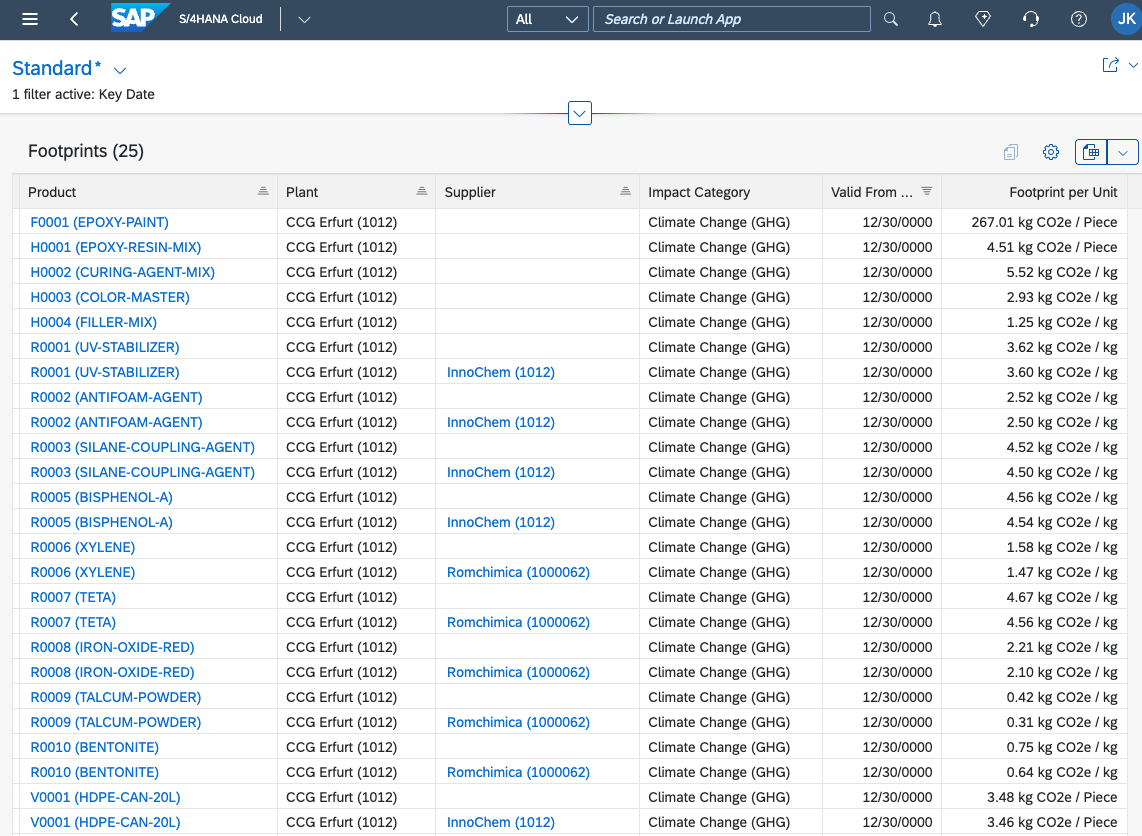
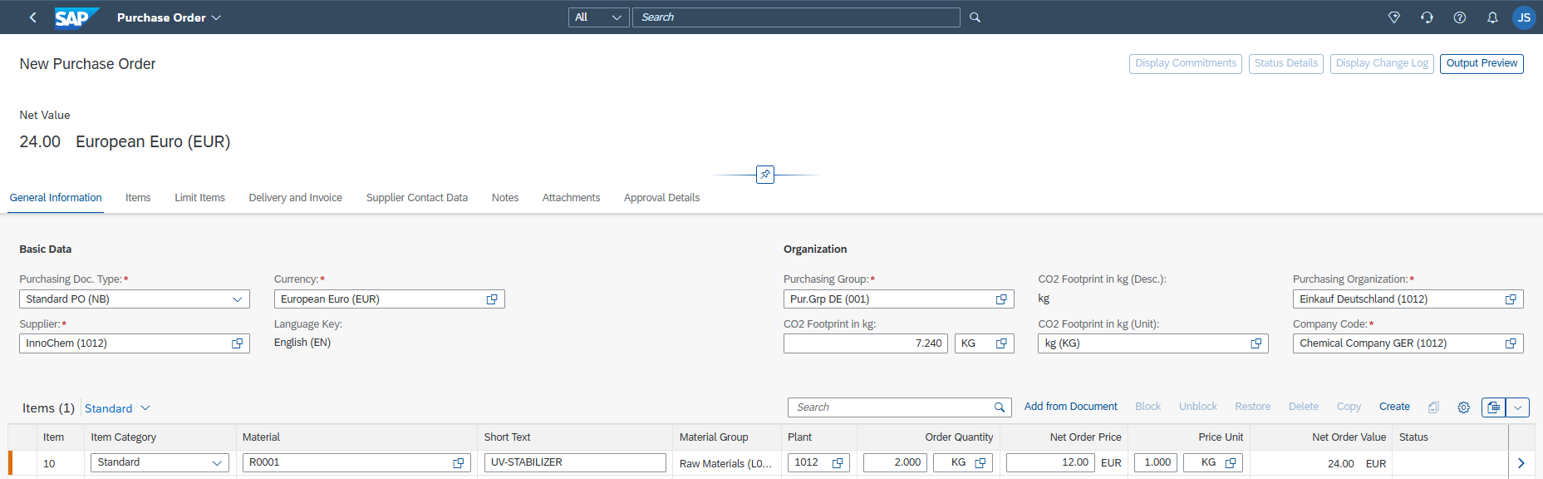
Integrate Product Carbon Footprints (PCFs) from SAP SFM directly into S/4HANA processes – enabling carbon-aware decisions in procurement, production, or product lifecycle management. We ensure a seamless connection between sustainability data and core ERP workflows.
- Enable auditable reporting via SAP green ledger
Record carbon emissions alongside financial data for audit-proof ESG reporting and CSRD-compliant disclosures. We help you configure the SAP Green Ledger for financial-grade carbon traceability.
- Gain clarity fast
Understand how SAP’s carbon management solutions align with your business needs and assess whether your current data landscape supports the required use cases and standards. Our structured readiness assessment gives you a clear go/no-go for data, processes, and system design.
- Design with sustainability in mind
Use this opportunity to integrate sustainability requirements directly into the future process and data architecture of your organization. With BearingPoint, sustainability becomes a core design principle – not an afterthought.
- Leverage combined SAP + Sustainability expertise
Partner with a team experienced in both SAP sustainability solutions and S/4HANA transformations – combining deep technical know-how with strategic insight. We translate regulatory requirements and decarbonization goals into SAP-ready business logic.
- Automate transactional carbon accounting
Get your organization ready for integrated, transactional carbon accounting powered by automation and aligned with your ESG goals. We enable you to build a smart, automated foundation for ESG alignment and reporting.
-
 Discover how an end-to-end carbon accounting scenario with SAP Sustainability Solutions enables harmonized data, audit-ready insights, and strategic decarbonization - all directly within your ERP landscape. 5.77 MB Download

Design sustainability into your SAP transformation
Talk to our experts to ensure your S/4HANA architecture is ready for carbon tracking, ESG reporting, and future-proof compliance.
Get in touch-
Use case: Data mapping and evaluation for a German steel producer
- A leading german steel manufacturer aimed to integrate sustainability data into its existing business processes. The objective was to align data quality and structure to ensure seamless integration with SAP S/4HANA and SAP sustainability footprint management (SFM).
Approach
1. Deep dive session execution
A focused workshop was conducted to assess the fit-to-standard mapping of master and transactional data.
Assessment of master & transactional data
The workshop revealed significant complexity in the client’s master and transactional data structures, with inconsistent use of key fields and varying data logic across units. Using our expert knowledge of SAP data.
2. Data readiness evaluation
The relevant data objects were reviewed using selected raw data examples to assess their readiness and completeness.
Material data gaps
A key challenge was the use of identical material numbers for different product variants and missing or inconsistent weight data, which limited traceability and accuracy in carbon footprint calculations. We addressed these gaps to ensure the material master could support reliable, product-specific emissions data in SAP SFM.
3. Data mapping
A detailed mapping exercise was conducted to align raw client data with the target data structures in SAP S/4 HANA and SFM. This included master and transactional data objects such as materials, boms, plant data, and energy consumption values.
To support this step, a dedicated excel-based mapping table was created, which captured:
- Source system fields and raw data
- Target fields in S/4HANA and SAP SFM
- Required transformations or enrichments
- Data ownership and responsibilities
This served as a transparent working document and helped structure the implementation path across IT and business functions.
4. Gap identification and alignment validation
Data gaps were identified and alignment with sap standards was validated through a structured fit-to-standard assessment. Inconsistencies in transport location logic.
A further challenge emerged around logistics and emissions allocation: in the current system, the billing address was often used as the reference point, instead of the actual start location of transport. This created a mismatch between logistical reality and emissions attribution, particularly for scope 3 transport emissions. Identifying and correcting such logic was crucial to ensure accurate and compliant footprint calculation in SAP SFM.Outcome
The steel producer now has a clear data strategy in place to support the integration of sustainability information. The results provide a solid foundation for further technical implementation and sustainable, standards-compliant data management.
Frequently asked questions
-
What is SAP S/4HANA design for carbon management?
SAP S/4HANA Design for Carbon Management is a structured methodology that enables organizations to embed sustainability considerations directly into their ERP transformation journey. It focuses on aligning business processes, data structures, and system architecture to support carbon accounting and emissions management from the ground up.
By designing your S/4HANA system with carbon management in mind, you ensure that your enterprise is prepared to integrate seamlessly with SAP sustainability solutions such as SAP Sustainability Footprint Management (SFM), Sustainability Data Exchange (SDX), Sustainability Control Tower (SCT) or SAP Green Ledger. -
Can I use SAP SFM or green ledger without this preparation?
While it is technically possible to implement SAP Sustainability Footprint Management (SFM) or the SAP Green Ledger without prior system design for carbon management, doing so often leads to integration challenges, data inconsistencies, and limited scalability.
Without upfront alignment of your processes, data models, and master data structures, the integration of sustainability tools can become fragmented and require significant rework.
The SAP S/4HANA Design for Carbon Management approach ensures that your core ERP environment is ready to support seamless, efficient, and future-proof integration with SAP’s sustainability solutions. -
How does SAP S/4HANA Design for Carbon Management support CSRD and GHG Protocol alignment?
SAP S/4HANA Design for Carbon Management lays the foundational groundwork for aligning your ERP system with leading sustainability frameworks such as the Corporate Sustainability Reporting Directive (CSRD) and the Greenhouse Gas (GHG) Protocol.
By proactively configuring data models, master data structures, and business processes to capture emissions-relevant information at a granular level, this design approach ensures your system can generate audit-ready, finance-grade carbon data. It enables transparent reporting across Scopes 1, 2, and 3, supports double materiality assessments, and ensures traceability from source transaction to final disclosure. -
Who benefits from this approach?
This approach is particularly valuable for:
- Organizations undergoing SAP S/4HANA transformations that want to embed sustainability from the outset, rather than retrofitting it later.
- Companies preparing for CSRD, ESRS, or GHG Protocol compliance, who need finance-grade, audit-ready emissions data integrated into core business processes.
- Enterprises aiming to align sustainability with financial and operational decision-making, enabling carbon transparency at the product, process, or business unit level.
- Sustainability and finance teams seeking a common data foundation to support decarbonization strategies, ESG reporting, and internal carbon steering.
- IT departments responsible for future-proofing the ERP landscape to support evolving regulatory and stakeholder requirements.
In short, any organization that sees sustainability as a strategic priority, and wants to operationalize it through SAP, will benefit from this design-first approach. -
What role does BearingPoint play?
BearingPoint acts as a strategic implementation partner, bringing together deep expertise in SAP ERP architecture and sustainability transformation. Our consultants help you:
- Define the carbon data model and reporting logic based on your business structure, regulatory obligations, and material sustainability topics.
- Identify and close data and process gaps across finance, procurement, production, and logistics.
- Configure your SAP S/4HANA system to capture and process emissions-relevant data at the transactional level.
- Enable seamless integration with tools like SAP SFM, SDX, SCT and SAP Green Ledger.
- Ensure scalability and compliance by aligning your system design with frameworks like the GHG Protocol, CSRD, and ESRS.
By embedding sustainability into your ERP landscape from day one, we help you turn regulatory pressure into business value - through transparency, efficiency, and actionable carbon insights.