- 2026/06/08
Understanding and reducing environmental impacts requires precise, comprehensive data across the full product life cycle. To support more accurate footprint calculations and deeper environmental insights, SAP Sustainability Footprint Management now introduces expanded gas-related impact categories for environmental footprint analysis.
This enhancement enables organizations to better identify improvement areas, increase transparency, and minimize the environmental impact of products and corporate activities.
Why expanded gas impact categories matter
Environmental footprint assessments increasingly go beyond carbon dioxide alone. Many greenhouse gases contribute significantly to climate and environmental impacts, and overlooking them can lead to incomplete analyses and missed optimization opportunities. With the introduction of 7 new gas-related impact categories, sustainability and product teams can now capture a broader range of emissions and improve decision-making across design, sourcing, manufacturing, and reporting.
Newly supported gas impact categories
The new feature enables footprint calculations across the following impact categories:
- Carbon Dioxide – Total (Biogenic and Fossil)
- Methane – Total (Biogenic and Fossil)
- Nitrous Oxide
- Hydrofluorocarbons (HFCs) – Aggregated GHGs
- Perfluorocarbons (PFCs) – Aggregated GHGs
- Sulphur Hexafluoride (SF₆)
- Nitrogen Trifluoride (NF₃)
By including both biogenic and fossil sources where applicable, organizations gain a more nuanced view of emissions across their value chains.
Managing Emission Factors with greater flexibility
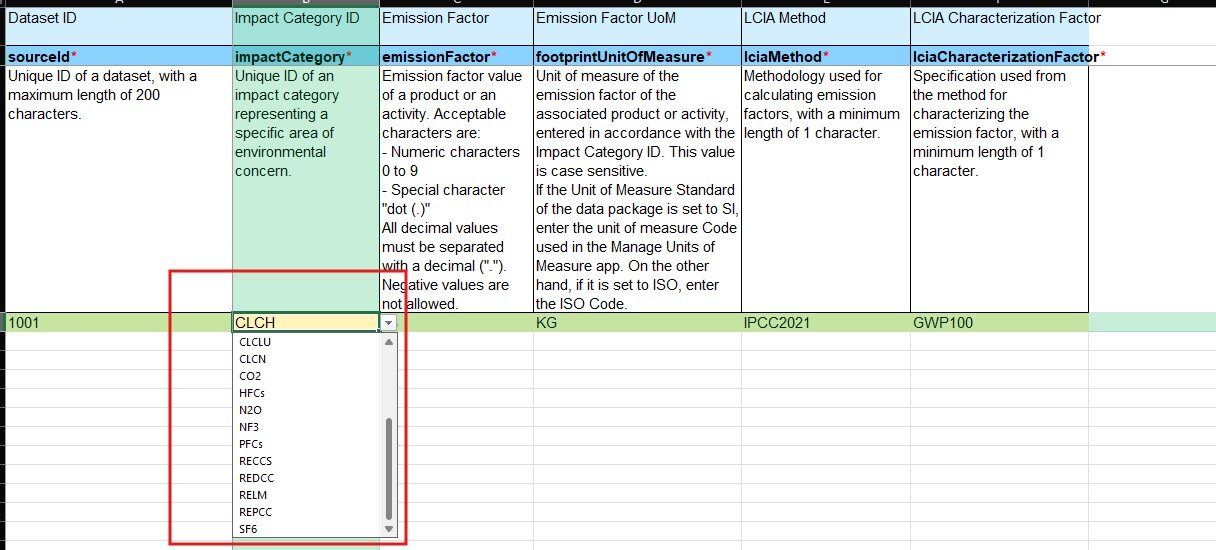
The Manage Emission Factors app has been enhanced to support the new gas-related impact categories.
Users can now:
- Add emission factor data for the new impact categories directly via the LCA template and Simple Template
- Access descriptions of the newly introduced impact categories through Impact Categories documentation
This ensures consistent, structured, and scalable management of emission data across products and activities.
Activating Impact Categories in Footprint Inventory Scopes
To support more comprehensive footprint modeling, the Manage Footprint Inventory Scopes app now allows:
- Activation of the newly introduced gas-related impact categories within a footprint scope
- Configuration of up to 12 active impact categories per scope, including Climate Change, which remains enabled by default
This increased flexibility allows organizations to tailor their footprint calculations to regulatory, reporting, or internal sustainability requirements.
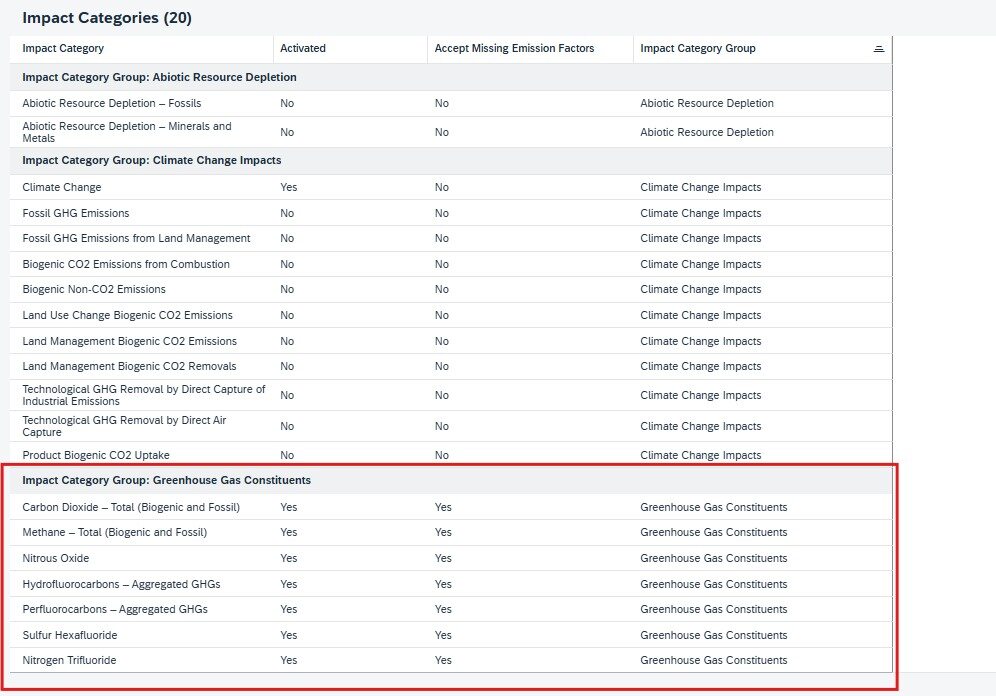
Note: You cannot activate more than 12 impact categories per Footprint Inventory Scope.
Enhanced transparency in Footprint Results
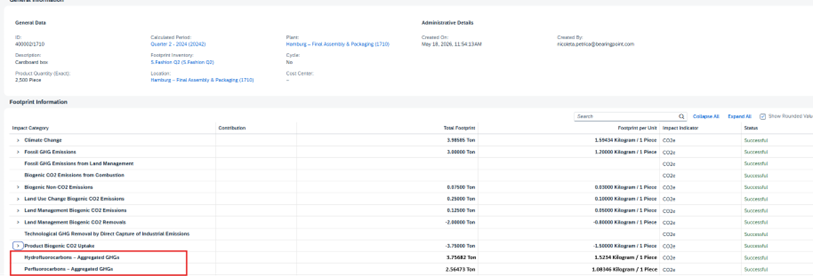
Once activated, scoped and successfully calculated, the new impact categories become visible in the Manage Footprint Results app. They are displayed in the Footprint Information table, providing clearer insights into how different gases contribute to overall environmental impacts.
This enhanced visibility supports:
- Better analysis of emission drivers
- More informed sustainability initiatives
- Improved communication of footprint results to internal and external stakeholders
Supporting more informed sustainability decisions
By expanding gas-related impact categories, SAP Sustainability Footprint Management strengthens its ability to support robust, science-based environmental footprint assessments. Organizations can now analyze emissions with greater granularity and take targeted actions to reduce environmental impacts throughout the product life cycle.